Real Estate Bubble: How to Spot One and What You Need to Know
Our CENTURY 21 Auteuil Immobilier and Auteuil Seine offices shed light on the concept of a real estate bubble, a topic that often comes up in conversations among sellers, buyers, and investors.
What is a real estate bubble?
A real estate bubble occurs when real estate prices rise sharply and sustainably, without a clear link to economic fundamentals such as household income, rents, employment, growth, or construction costs. Homes are then sold at prices that no longer reflect their actual utility value, but rather expectations of future capital gains.
The real estate market is, by its very nature, cyclical, with periods of growth and decline. A bubble, on the other hand, is characterized by excessive price increases that are disconnected from the real economy. As long as demand remains strong, the bubble continues to grow, until the market turns and undergoes a sharp correction.
What causes a real estate bubble?
Several factors can contribute to the formation of a real estate bubble:
- Some interest rate low interest rates and easy access to credit, which encourage households to borrow more and make more expensive purchases;
- Excessive speculation, when investors buy primarily to resell quickly at a capital gain ;
- A persistent imbalance between supply and demand, particularly in large, attractive metropolitan areas;
- Excessive optimism, fueled by the idea that “prices can only go up”;
- Certain public policies, subsidies, or poorly designed tax measures can stimulate demand too strongly without sufficiently increasing supply.
It is the combination of these factors that creates conditions conducive to the formation of a bubble, especially if the market lacks regulation and oversight.
How can you spot a real estate bubble?
Detecting a real estate bubble in real time is not easy, since the analysis is often conducted over the long term. However, there are a few warning signs to watch for:
- A rise in prices that is much faster than the rise in incomes;
- An abnormally high price-to-income or price-to-rent ratio;
- A rise in speculative purchases at the expense of primary residence projects;
- A very optimistic general sentiment, where people buy “out of fear of missing out” rather than out of actual need.
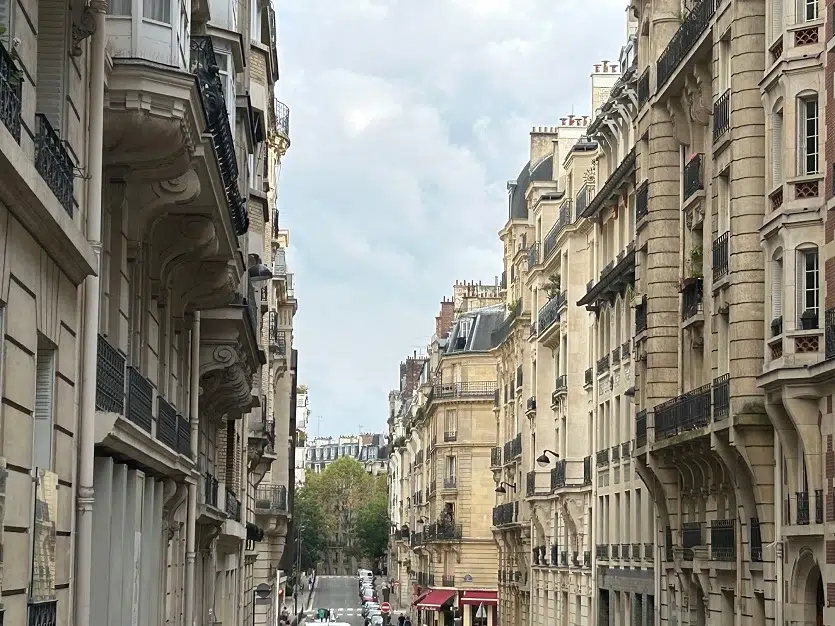
Be careful, though : A rise in prices does not automatically mean there is a bubble. In certain sought-after neighborhoods of Paris’s 16th arrondissement, a price increase may be justified by the scarcity of supply, quality of life, infrastructure, or international demand.
Are Paris and the Île-de-France region overvalued markets?
Paris and the Île-de-France region are regularly the subject of debate regarding the potential risk of a housing bubble. Prices there are higher than in the rest of the country, and some households must make a significant financial commitment to purchase a home, particularly in the central arrondissements and in western Paris.
However, these price levels can also be explained by structural factors: strong economic appeal, dynamic job markets, transportation networks, high-quality schools, and the scarcity of land. In the 16th arrondissement, the residential environment, green spaces, and the prestige of certain neighborhoods account for part of this high valuation.
We can talk about “necessary vigilance,” but not about a bubble: the analysis must be conducted neighborhood by neighborhood, street by street, and not based solely on national averages.